The Future of Fashion Retail is Digital
How AI is transforming every stage of the fashion value chain — from design to customer
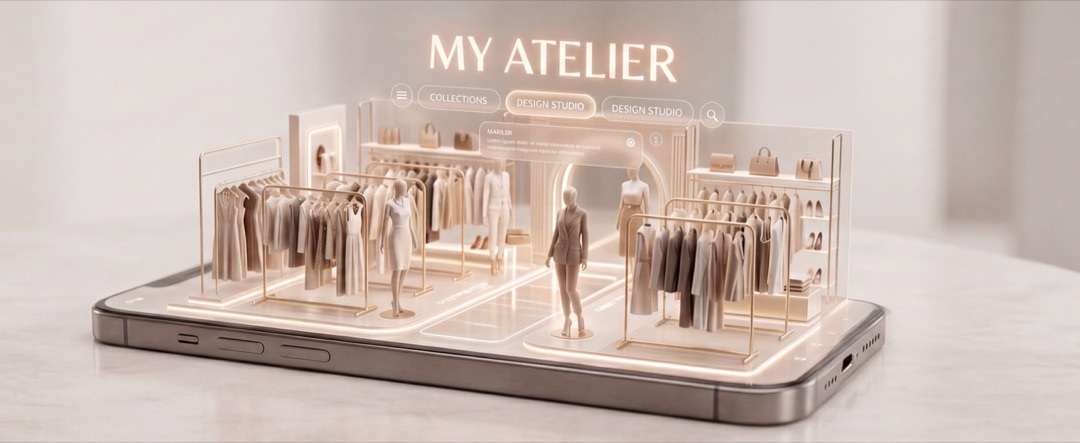
The Shift is Here
Fashion retail is undergoing its most significant transformation since the advent of e-commerce. Artificial intelligence is no longer a futuristic concept for the industry — it is the present reality reshaping how garments are designed, visualized, photographed, and sold.
From boutique owners in Jaipur generating 20 design variations in under a minute, to global retailers slashing photography budgets by 90%, AI fashion retail tools are democratizing capabilities that were once exclusive to brands with million-dollar budgets. The question is no longer whether to adopt AI, but how quickly you can integrate it before your competitors do.
The Numbers Don't Lie
The AI in fashion market has reached an estimated $2.5–4.0 billion in 2026, growing at an extraordinary 39–41% compound annual growth rate. By 2033, the market is projected to reach $39.7 billion — a 10x increase in just seven years.
This growth is being driven by real, measurable returns. More than 85% of e-commerce businesses now report some form of AI adoption, and 68% of retailers have integrated AI-powered virtual fitting rooms and chatbots to enhance the customer experience.
The virtual try-on market alone is on track to grow from $1.2 billion in 2022 to $8.5 billion by 2030. AI-powered styling and personalization apps are projected to expand from $1.6 billion to over $10.5 billion in the same period.
AI Design: From Weeks to Seconds
Traditional fashion design cycles are measured in weeks and months. A single collection might require dozens of sketches, fabric sourcing, sample creation, and multiple rounds of revision — all before a customer ever sees the garment.
AI design tools are compressing this timeline dramatically. Platforms like Faaya enable designers and boutique owners to generate 20+ design variations from a single reference image or text prompt. New prints, silhouettes, colorways, and fabric combinations can be explored in seconds, not weeks.
For boutiques and small retailers, this is transformative. A store owner can now show a customer exactly what a garment would look like in a different color, pattern, or style — and close the sale on the spot. No more "Sorry, we don't have that in blue."
The End of the Traditional Photoshoot
Product photography has long been one of the most expensive and time-consuming aspects of fashion retail. A traditional photoshoot involves booking studios, hiring photographers and models, managing logistics, and waiting 2–3 weeks for final images. Large retailers routinely spend $1–5 million annually on photography alone.
AI-generated product photography is fundamentally changing this equation. A 2025 industry study found that 76% of small businesses using AI photography tools reduced their visual content production costs by over 80%.
The results are striking. One mid-size retailer reduced their annual photography budget from $480,000 to just $48,000 — while simultaneously increasing their visual content output by 400%. A fashion startup generated lifestyle variations for 45 products in two days for under $500, compared to $40,000+ for a traditional shoot.
Virtual Try-On & 3D Visualization
Perhaps no AI application is transforming the customer experience more visibly than virtual try-on and 3D garment visualization. By 2026, these tools have become the non-negotiable standard for digital fashion retail.
For bespoke tailors and custom clothiers, 3D visualization solves a critical pain point: the client's inability to envision the finished garment before it's made. With AI-powered 3D avatars, customers can see how their suit, lehenga, or dress will look — approving the design in 30 seconds rather than waiting weeks for a sample that might require costly alterations.
The impact on returns is significant. Brands using virtual try-on technology report up to 50% fewer returns, as customers make more confident purchasing decisions when they can visualize the garment on their body type before ordering.
The Boutique Advantage
There is a common misconception that AI in fashion is only for large enterprises with deep technology budgets. The reality is the opposite: AI fashion retail tools are the great equalizer for small retailers and boutiques.
A single-store boutique owner can now access capabilities that previously required a dedicated design team, a photography studio, and a technology department. AI design generation, virtual photoshoots, 3D try-on, and automated lookbook creation are available at a fraction of what they would cost as traditional services.
For boutiques in India's fashion-rich markets — from Jaipur's textile hubs to Mumbai's bespoke tailors — this levels the playing field against larger retail chains. A boutique can now refresh its catalog weekly, show customers unlimited design variations, and generate professional marketing content without a single studio booking.
What's Next: 2026 and Beyond
The current wave of AI adoption in fashion is just the beginning. Several trends will define the next phase:
- Hyper-personalization at scale. AI will enable every customer interaction to be uniquely tailored — from the designs they see to the way products are styled and recommended.
- End-to-end digital workflows. The entire fashion value chain — from initial concept to customer delivery — will be connected through AI-powered platforms, eliminating manual handoffs and reducing time-to-market.
- Phygital retail experiences. In-store AI kiosks, virtual try-on mirrors, and interactive displays will merge the physical and digital shopping experience.
- Sustainability through digitization. By reducing the need for physical samples, prototype iterations, and wasteful photoshoots, AI is helping fashion become more sustainable by design.
The Time to Act is Now
The fashion industry's digital transformation is not a distant prospect — it is happening right now. Every day without AI-powered tools is a day of lost sales, higher costs, and missed opportunities.
Faaya brings AI to every stage of your fashion business — from design generation and 3D visualization to AI photoshoots and smart outreach. Whether you run a single boutique or a retail chain, the platform adapts to your workflow and delivers results from day one.
Ready to bring AI to your store?
Sources
- Research and Markets — AI in Fashion Market Report 2026
- Entrepreneur — Cutting Product Photography Costs by 80% With AI
- PYMNTS — Rise of AI-Generated Fashion Shoots
- Crescendo AI — AI in Fashion Retail Guide 2026
- Fortune Business Insights — AI in Fashion Market 2025–2032
- Straits Research — AI in Fashion Market Report 2033